
The same applies to the 180 ml, 375 ml, and 750 ml bottle sizes. Treating one guessed figure as a national price would mislead buyers, since Indian liquor prices depend on state rules and approved retail listings.
Price Checks for Common Bottle Sizes
| Bottle size | What a proper price check needs |
| 180 ml | Matching product label and current state listing |
| 375 ml | Matching product label and current state listing |
| 750 ml | Matching product label and current state listing |
A bottle size changes the amount you pay, but it does not prove the brand identity. A small bottle marked 180 ml should never be used to answer a question about a 750 ml bottle.
For that reason, the lion daddy rum price in india should be checked by size, state, and label. Those three details belong together on any useful liquor-price page.
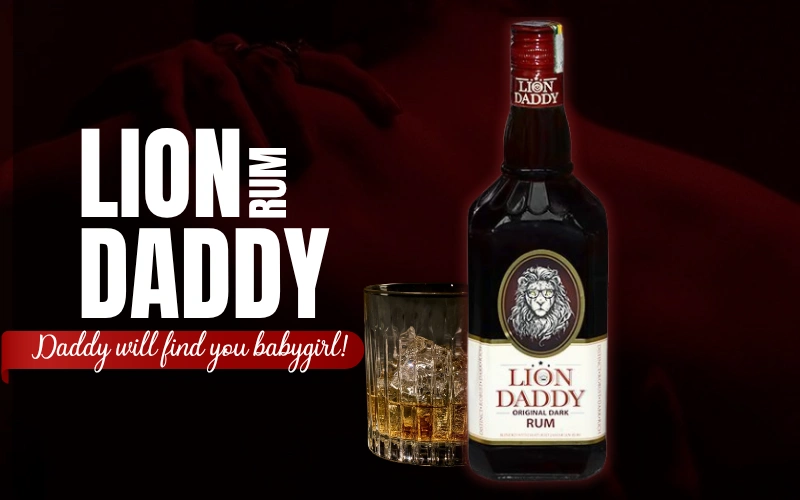
lion daddy rum price in UP, Kerala, and Haryana
Searches for lion daddy rum price in UP need a Uttar Pradesh price list and a matching bottle label. A figure from another state cannot be carried across as the local retail rate.
The same rule applies to lion daddy rum price in Kerala. Kerala has its own liquor retail system, so a listing must match the state, bottle size, and current sales period before it becomes useful.
Searchers also ask for lion daddy rum price in Haryana. Haryana requires its own state-level check, just as Uttar Pradesh and Kerala do.
State excise systems can change the final shelf price. Approved retail lists may also differ by state, which is why one India-wide figure is a poor shortcut.
Read More: Singhasan Whisky Price
How to Check a Bottle Price Before Buying
Start with the front and back labels. Confirm the exact brand spelling, the manufacturer name, and the alcohol details printed on the bottle.
Next, match the bottle size. Compare 180 ml with 180 ml, 375 ml with 375 ml, and 750 ml with 750 ml. This avoids confusing a quarter bottle with a full bottle.
Then read the printed maximum retail price. The label gives you a direct reference for that bottle, while a search result may belong to an older sales period or a different state.
Finally, compare the label with a current state-approved listing. An undated result should not be treated as a 2026 price, especially when the product name itself may be confused with an animal search.
- Confirm the exact brand spelling.
- Match the manufacturer and bottle size.
- Read the printed maximum retail price.
- Check the current state-approved listing.

Is Lion Daddy a Rum Brand or Animal Result?
The available animal result identifies the lion as Panthera leo. It does not identify a rum product, a liquor maker, or a retail bottle called Lion Daddy.
That distinction matters because the word “lion” can send two very different searches toward the same results page. Animal facts cannot establish a brand owner, alcohol percentage, retailer, or product availability.
Before using the phrase lion daddy rum price in india, check that the result shows a real bottle label and a named seller. A product image without a matching manufacturer detail is not enough for a price claim.
Lion Facts Connected With the Alternate Search
Lions live in family groups called prides. The available animal account says prides are generally made up of about 80% females, with group life shaping hunting and care of young animals.
A lion has 30 teeth. That total includes four canines and four carnassial teeth, which are adapted for cutting meat.
Male lions can have manes in several shades. The colours listed include blonde, red, brown, and black, giving the animals a wide range of appearances.
Lions are found across sub-Saharan Africa. A small Asiatic lion population remains in India’s Gir Forest, which links the animal meaning of this search to a specific Indian region.

Asiatic Lion Range and Conservation Status
The scientific name supplied for the animal is Panthera leo. The Asiatic lion population in India is placed at approximately 600 individuals in the animal account.
The stated Indian range covers a wildlife sanctuary measuring 545 square miles, or 1,400 square kilometres. That narrow range makes the Asiatic lion distinct from the wider African lion population.
These wildlife facts have no role in setting a rum price. They belong to the alternate animal meaning, while liquor prices require a bottle, a state, and a current retail record.
Additional Lion Records
The source gives an estimated total of 23,000 to 39,000 mature individuals for lions. This broad figure is different from the approximately 600 Asiatic lions mentioned for India, so the two numbers should not be treated as interchangeable: one describes mature individuals in the wider population estimate, while the other refers to the Asiatic population.
| Date or period | Animal-related detail |
| 1936 | A lion weighing 690 pounds was recorded in South Africa. |
| 1942 | The last documented sighting of the Barbary lion was reported in Algeria’s Atlas Mountains. |
| 1993–2014 | The source cites a 42% decline in the lion population during this period. |
| 2017 | Scientists reclassified lion groupings that had previously been treated as two recognized subspecies. |
| 2020 | Six white lions were located at Parc Safari near Montreal, Quebec. |

This timeline shows why a general search result can contain several unrelated kinds of information: historical records, population estimates, classification changes, and sightings may all appear beside the word “lion.” None of those dates confirms a Lion Daddy rum manufacturer, a bottle size, or a current Indian retail price.
Historical and Classification Notes
The research also notes a classification change in 2017. Scientists reclassified lion groupings that had previously been treated as two recognized subspecies, adding a scientific-history detail that should not be confused with a change in liquor-brand identity.
White lions provide another example of why the word “lion” alone is not enough to identify a search subject. As of 2020, the source said that six white lions were located at Parc Safari near Montreal, Quebec; this is a zoo or wildlife-location detail, not evidence of a product sold in India.
Common Mistakes in Lion Daddy Price Searches
The first mistake is treating “Lion” as proof of a liquor brand. The animal result names Panthera leo, while a rum listing would need a product label and manufacturer.
The second mistake is moving a price between bottle sizes. An amount for 180 ml cannot answer the 375 ml or 750 ml question without a matching listing.
The third mistake is applying one state’s rate across India. Uttar Pradesh, Kerala, and Haryana need separate checks because approved liquor prices can differ by state.
The drinking age is 21 or older in most Indian states, though the legal age varies by state. Buyers should follow the rule that applies where the purchase takes place.
Check More: Lion Daddy Rum Price
FAQs
What is Lion Daddy rum’s price in India?
No current rupee amount is established for Lion Daddy rum in India. A usable figure must match a named manufacturer, a bottle size, and a dated state listing.
What is the Lion Daddy rum price for 180 ml?
No rupee amount is established for the 180 ml bottle. The correct check requires the bottle label, the manufacturer, and the state where it is sold. A 180 ml search cannot be answered by copying a figure connected with a 375 ml or 750 ml bottle.
What is the Lion Daddy rum price for 375 ml?
No current amount is established for the 375 ml size. The bottle must be matched with a current approved listing for the relevant state. A result that only shows the word “Lion” does not identify a 375 ml rum product.
What is the Lion Daddy rum price for 750 ml?
No current amount is established for the 750 ml bottle. A full-bottle price needs a matching label and a dated retail record. The term lion daddy rum price in india should not be used as proof of a universal 750 ml rate.
Which Indian states sell Lion Daddy rum?
No state availability is established for the product. Searches for Uttar Pradesh, Kerala, and Haryana need separate state-level product listings. A bottle shown in one location cannot prove sales across India.
Why do liquor prices vary between Indian states?
Liquor prices differ because Indian states use their own excise systems and approved retail price lists. The final shelf amount can therefore change between states. A national price is not a safe substitute for a current state listing.
Key Takeaways
- A state, bottle size, and matching label are essential for any usable liquor price.
- UP, Kerala, and Haryana require separate price checks.
- Animal facts about Panthera leo should not be used as rum-brand evidence.
- The 180 ml, 375 ml, and 750 ml sizes must be checked separately.
- Gir Forest is linked with India’s remaining Asiatic lions.
- The available animal account estimates 23,000 to 39,000 mature lions worldwide.
- Historical records include a 690-pound lion recorded in South Africa in 1936 and a Barbary lion sighting reported in 1942.
Thanks for reading, and please stay safe and responsible.
